



Does Washing Your Vegetables Actually Remove Pesticides?
There is a small ritual that happens in almost every Indian kitchen, several times a day. Vegetables come out of the bag. They go under the tap. Water runs over them for ten, maybe twenty seconds.
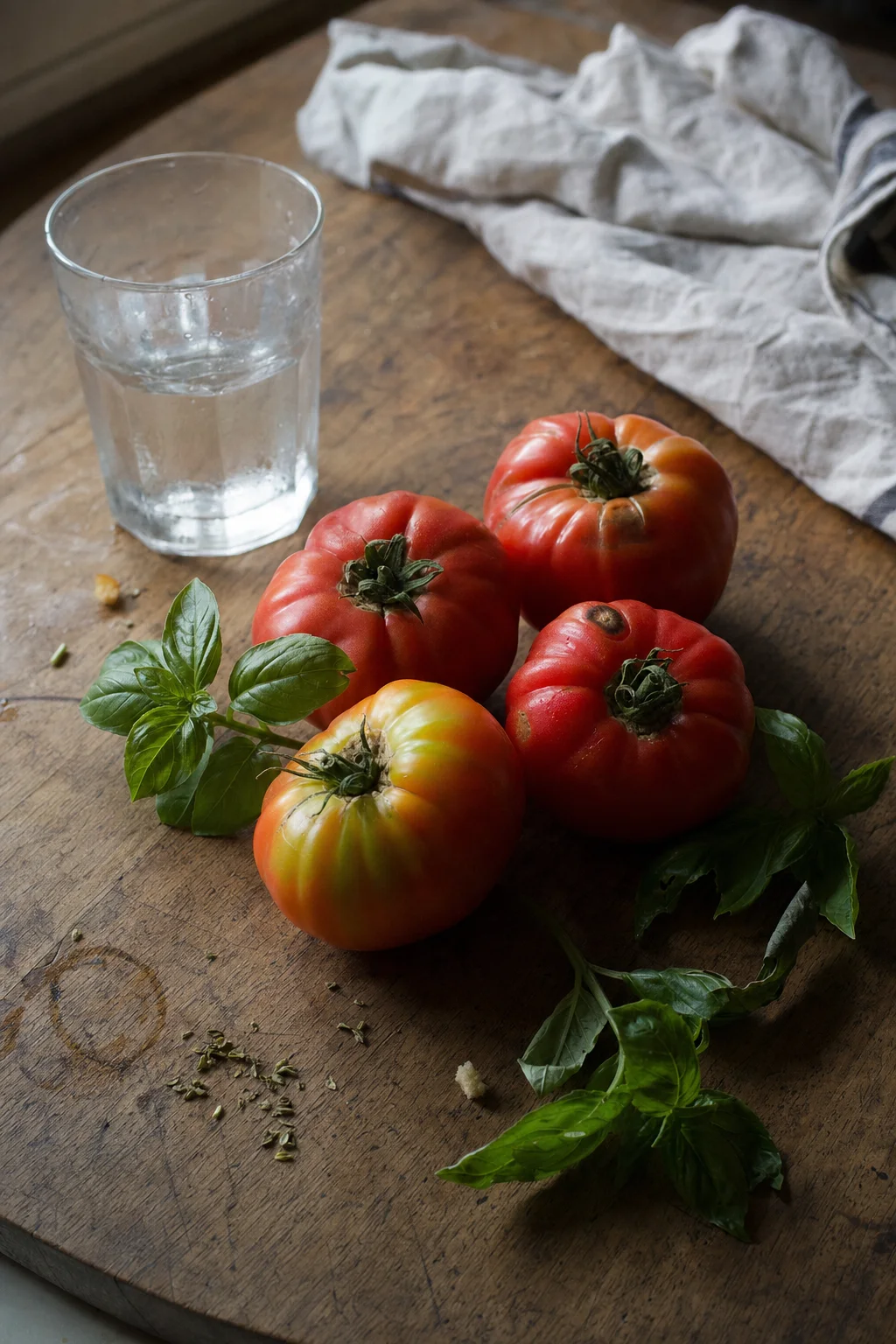
There is a small ritual that happens in almost every Indian kitchen, several times a day. Vegetables come out of the bag. They go under the tap. Water runs over them for ten, maybe twenty seconds. Someone rubs a tomato with their thumb. And then, satisfied, they move to the chopping board.
We have all done it. Most of us learned it by watching someone else do it , a mother, a grandmother , and we have never once stopped to ask whether it works.
The uncomfortable answer is: not really.
What a rinse actually removes
We ran the test ourselves. We took ordinary produce, gave it the kind of quick rinse most people give it, and sent it to a lab.
The result: roughly 2% of the surface pesticide residue came off.
Two percent.
If you look at the wider scientific literature, the picture varies , a large review of 47 peer-reviewed studies found that plain water removes a median of around 30% of surface residue, though the range runs from almost nothing to over 90% depending on the pesticide and the produce. What that range really tells you is that washing is a gamble. Sometimes it works. Often it barely does. And you have absolutely no way of knowing which one you got.
Why water fails , and why it was always going to
Here is the part almost nobody knows, and it explains everything.
Most modern pesticides are oil-based, and they are engineered to survive water. Deliberately.
Think about it from the farmer's side. If a pesticide washed off in the first monsoon shower, it would be useless , he would have to spray again after every rainfall. So the chemistry is designed to cling. To resist rain, irrigation, humidity, transport, and storage.
Rain is neutral water, at around pH 7. So is the water from your tap.
Which means the water you wash your vegetables with is, chemically speaking, almost exactly the thing these compounds were built to withstand. Your kitchen tap is running the same test the pesticide already passed in the field.
It is not that we have been washing wrong. It is that plain water was never going to be enough , and no one ever told us.
What about salt, vinegar, and baking soda?
The ghar ke nuskhe. Every Indian household has one. And to be fair to them, they do work better than plain water.
But each comes with a cost that nobody mentions:
Baking soda performs well in laboratory conditions , but the studies achieving high removal used soaks of 12 to 15 minutes, at concentrations far stronger than most people use at home. Nobody is soaking their coriander for a quarter of an hour before dinner. And at strong concentrations, it can damage the surface of delicate produce.
Vinegar works reasonably well, but it seeps into porous produce , coriander, broccoli, leafy greens , and changes the flavour of what you cook.
Salt water removes a decent fraction, but it dehydrates greens and leaves them limp.
Commercial vegetable washes perform inconsistently, and they solve a chemical problem by adding another chemical you then have to rinse off.
So the choice, until now, has always been the same uncomfortable one: clean your produce properly, or keep its taste, texture and freshness intact. Rarely both. And almost never quickly.
What actually works
The reason plain water fails is chemical. So the solution has to be chemical too , without adding anything to your food.
That is where high-pH ionized water comes in. At a strong alkalinity (around pH 11.5), water gains the ability to break down and lift away the oil-based residues that neutral water simply rolls past. It is the same principle by which dish soap dismantles grease on a pan , except here, nothing is added. The cleaning power comes from the water itself, changed using only electricity.
This is not a fringe idea. Alkaline electrolyzed water has been studied in peer-reviewed food science for years, and researchers have documented its ability to remove pesticide residues from a range of fruits and vegetables without damaging their texture.
In our own testing, across more than 100 laboratory tests at independent, accredited labs, this approach removed up to 99% of the surface pesticide residue on tested produce , with no additives, no soak time, no flavour change, and no wilting.
The honest caveat
We will always tell you what a method cannot do, as well as what it can.
Every wash , ours included , works on surface residue. Some pesticides are systemic: absorbed into the plant's tissue as it grows. No amount of washing, by any method, removes those. Anyone who tells you otherwise is selling you something.
But surface residue is the overwhelming majority of what sits on your produce. And for the first time, there is a way to remove almost all of it, without giving anything up.
The bottom line
The rinse under the tap was never the problem. The rinse was just never enough , and nobody ever told us.
Our food has changed enormously over the last fifty years. The way we grow it, protect it, transport it, and deliver it has all been re-engineered.
The way we wash it hasn't changed at all.
That is the gap. And it is the only step in the entire journey of your food that you actually control.