



What Is Ionized Water , and How Does It Clean Food?
The claim sounds like something you should be suspicious of. Water that cleans pesticide off your food. No chemicals. No additives. Just water, changed somehow. If your instinct is to raise an eyebrow, good.
The claim sounds like something you should be suspicious of.
Water that cleans pesticide off your food. No chemicals. No additives. Just water, changed somehow.
If your instinct is to raise an eyebrow, good. That instinct is exactly right, and it is the same one that took us four years and more than a hundred laboratory tests to satisfy.
So here is the actual science, explained properly. No hand-waving.
Start with pH
You probably met the pH scale in a school laboratory, with a strip of litmus paper that turned blue or red. That was the beginner's version.
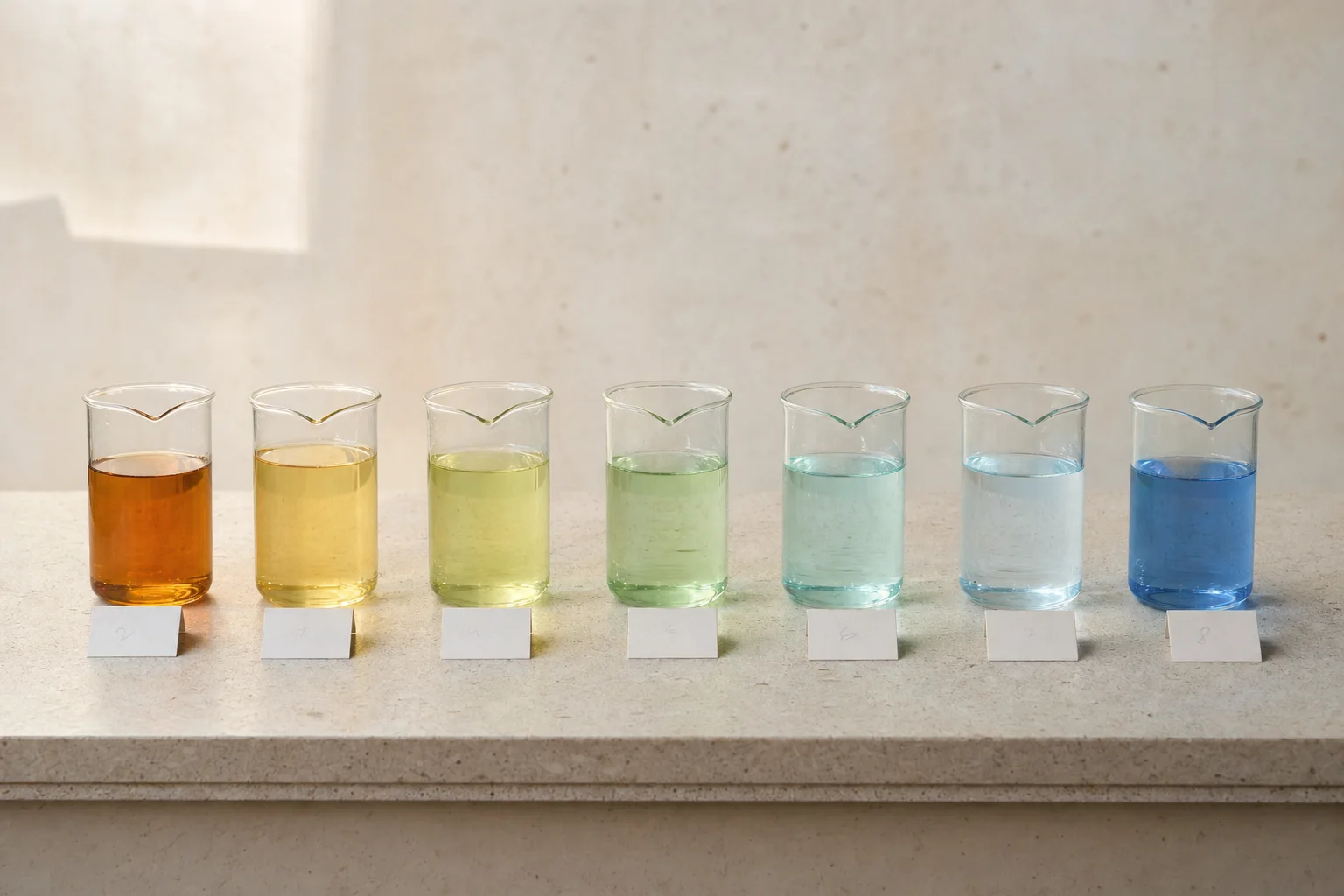
pH measures how acidic or alkaline something is, on a scale from 0 to 14. Below 7 is acidic. Above 7 is alkaline. Exactly 7 is neutral.
Cola sits at around pH 2.5 , sharply acidic, which is why it tingles, and why too much citrus makes your teeth feel strange. Tap water sits right in the middle, at pH 7. Neutral.
And here is the fact that unlocks the whole problem: most pesticides also sit at roughly neutral pH.
They are chemically similar to the water you are washing them with. Which is precisely why nothing happens.
Why pesticides survive water on purpose
Modern pesticides are, for the most part, oil-based.
They are engineered this way deliberately. If a pesticide washed off in the first rainfall, it would be commercially useless , a farmer would have to respray after every shower. So the chemistry is built to resist water. To hold on through rain, irrigation, humidity, transport and storage.
Rain is neutral water. Your tap is neutral water.
So when you rinse a tomato, you are running the exact test that the pesticide was engineered to pass. It passed it in the field. It will pass it in your sink.
This is not a failure of effort. It is a failure of chemistry , and it was never going to work.
How electrolysis changes water
To break something built to resist neutral water, you need water that is no longer neutral.
This is where electrolysis comes in, and the principle is simpler than it sounds.
Inside the machine, water flows across a set of titanium plates carrying an electrical current. That current splits the water into two distinct streams at two different electrodes , the cathode and the anode.
One side becomes strongly alkaline. This is the produce-washing stream, reaching around pH 11.5.
The other side is a gentler, hydrogen-rich stream, safe for daily drinking at around pH 9.5.
Two outputs. One machine. And nothing added to either , the only inputs are water and electricity.
The part that makes it work: emulsification
Here is where it gets satisfying to watch.
Pour oil into ordinary water and it floats. Clean, obvious separation. They do not mix , which is exactly the problem with oil-based pesticide residue.
Pour the same oil into strongly alkaline water, and something different happens. The water turns milky, almost instantly. The oil is not floating anymore. It has broken apart and dispersed into the water.
That process is called emulsification, and it is the same principle by which dish soap dismantles grease on a pan. At high alkalinity, oil molecules break down and lift away , except here, no soap is involved. The water itself is doing the work.
Since most pesticide residues are oil-based, exactly the same thing happens to them.
This is not a novel or fringe claim. Alkaline electrolyzed water has been studied in the peer-reviewed food science literature for over a decade, and researchers have documented its efficacy at removing pesticide residues from a range of fruits and vegetables , importantly, without significant deterioration in the texture or quality of the produce.
The second gift: ORP and shelf life
There is a bonus that surprised us during testing.
ORP , oxidation-reduction potential , measures whether a liquid promotes oxidation or resists it. Oxidation is what turns a cut apple brown, rusts iron, and spoils food.
Ordinary tap water carries a positive ORP: roughly +200 to +400 millivolts. It promotes oxidation.
Ionized water carries a strongly negative ORP , meaning it resists it.
The practical consequence: produce washed in ionized water oxidises more slowly. In our shelf-life testing, washed vegetables stayed fresh significantly longer. This aligns with the wider research, which has found electrolyzed water can suppress browning, delay senescence, and help maintain bioactive compounds in fresh produce.
Cleaner food that also lasts longer. We did not design for that. It came with the chemistry.
What it does , and what it doesn't
We have built this company on a simple principle: never claim more than the data supports.
So here is the honest boundary.
Ionized water removes surface pesticide residue , up to 99% of it, in our testing across more than 100 tests at independent, accredited laboratories.
It does not remove systemic pesticides , those absorbed into the plant's tissue as it grows. No wash, by any method, does. Anyone claiming to make produce "pesticide-free" is claiming something no technology can currently deliver.
We will not say "pesticide-free," and we never will. What we will say is that almost everything sitting on your produce can now be removed , with nothing but water.
Why this matters
For fifty years, every part of how food reaches us has been re-engineered. The way we farm it. Store it. Move it. Deliver it to a doorstep in ten minutes.
The wash , the very last step, the one that happens in your own hands, the one that decides what actually enters your body , never changed at all.
That is not a failure of care. Indian kitchens are among the most careful in the world.
It is simply that, until now, there was nothing better to do.
Now there is.
Estoqi is a Mumbai-based food safety company. Our technology has been validated across 100+ tests at independent, accredited laboratories. We publish our lab reports , because a claim without proof is just a claim.